
Last updated November 14, 2026
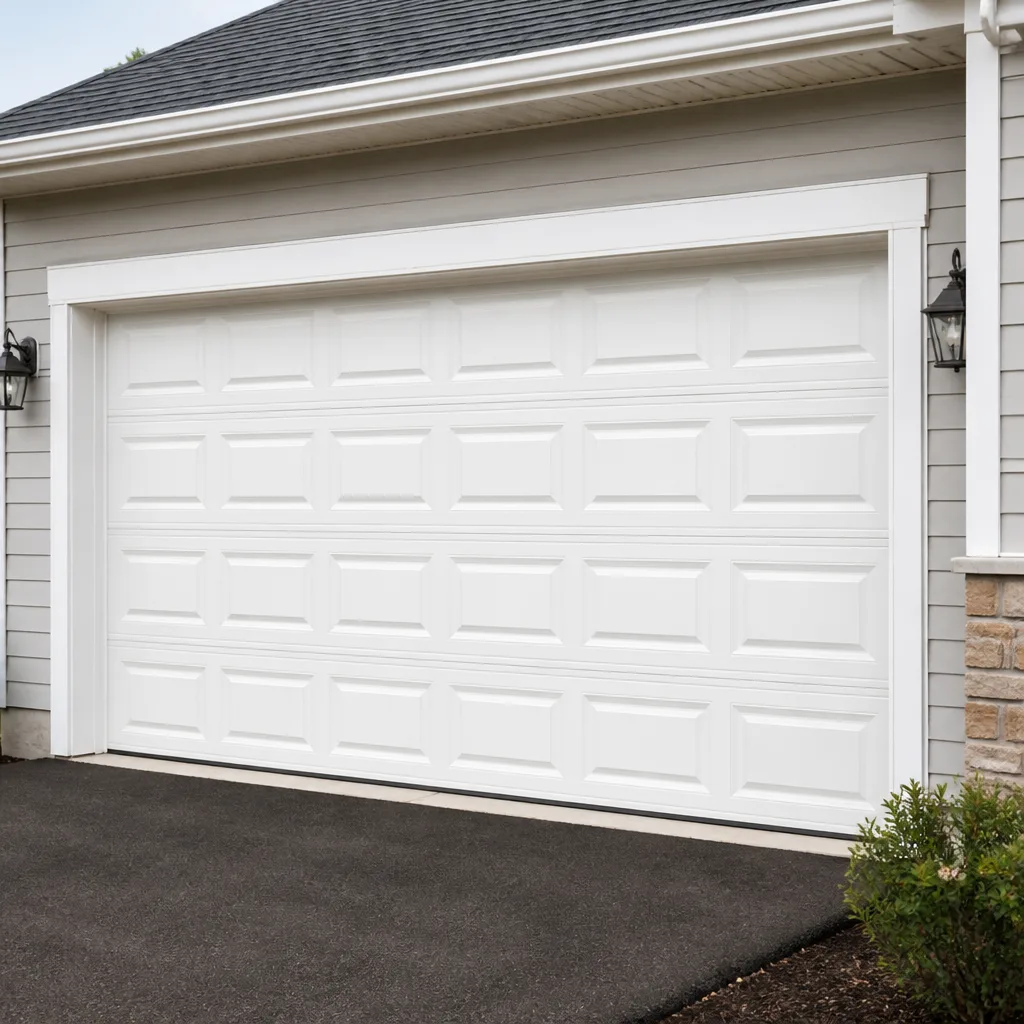 Raised-panel steel
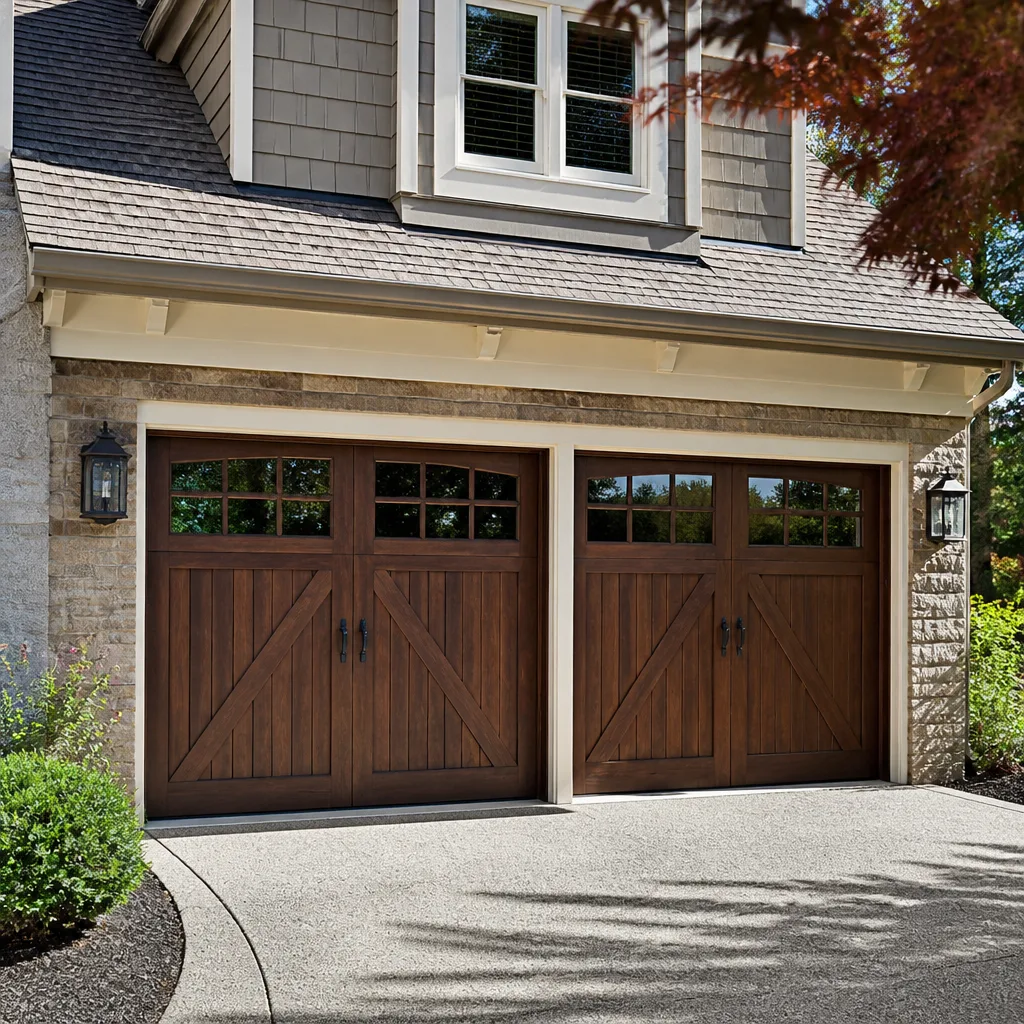 Carriage house
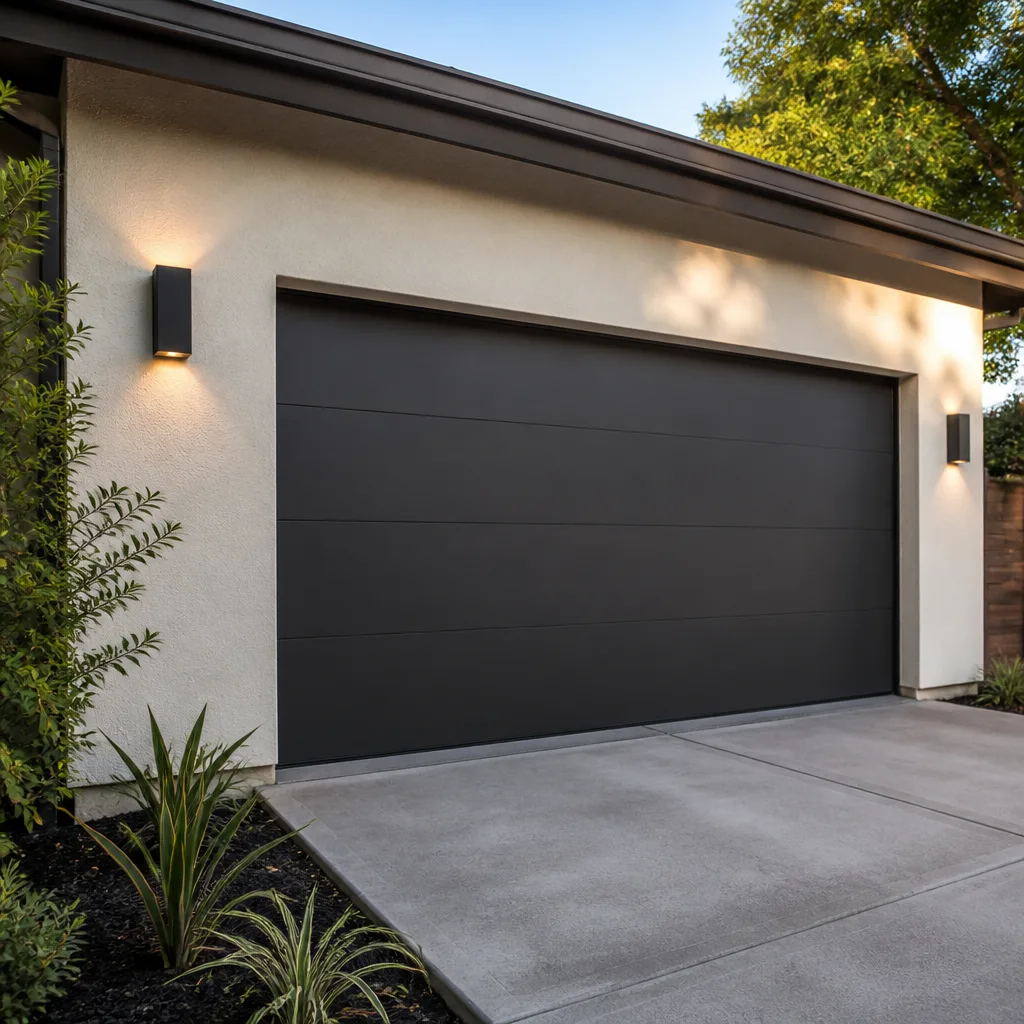 Modern flush
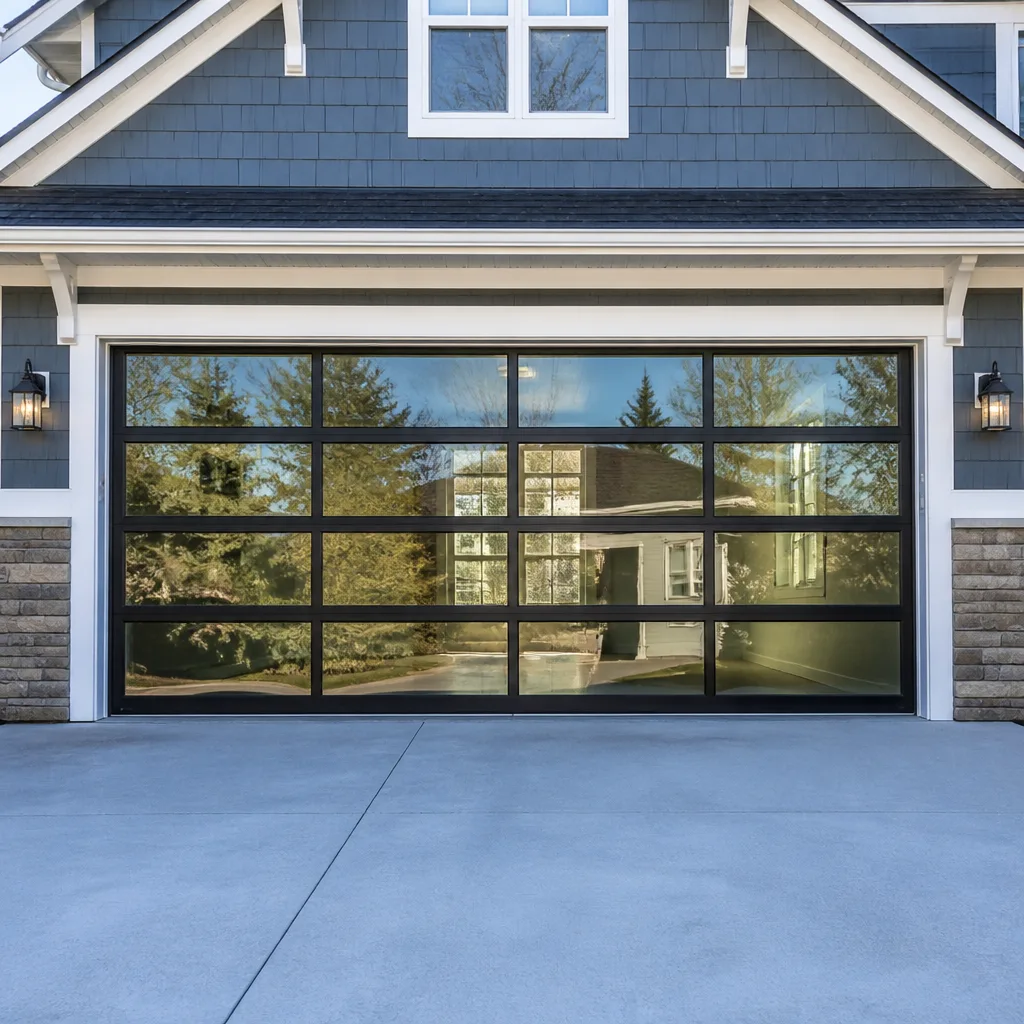 Full-view glass
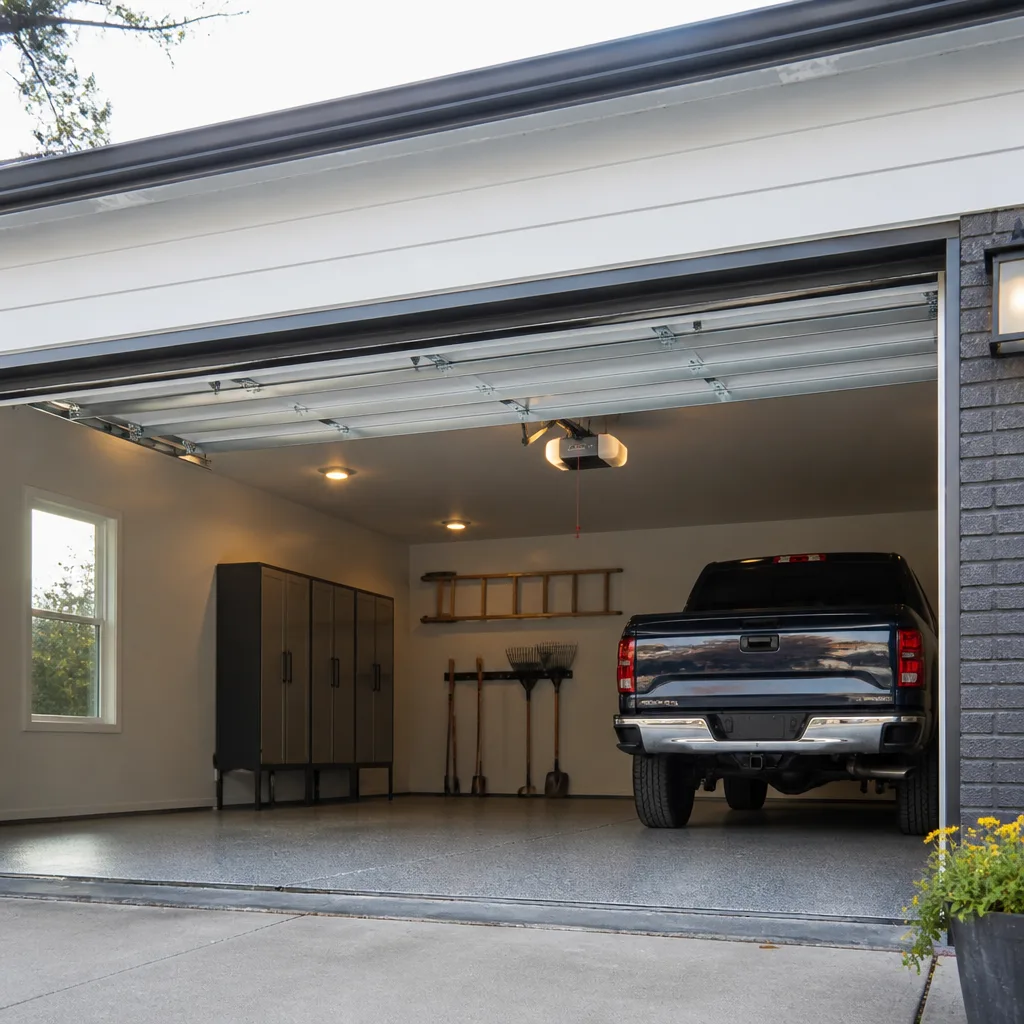 LiftMaster openers
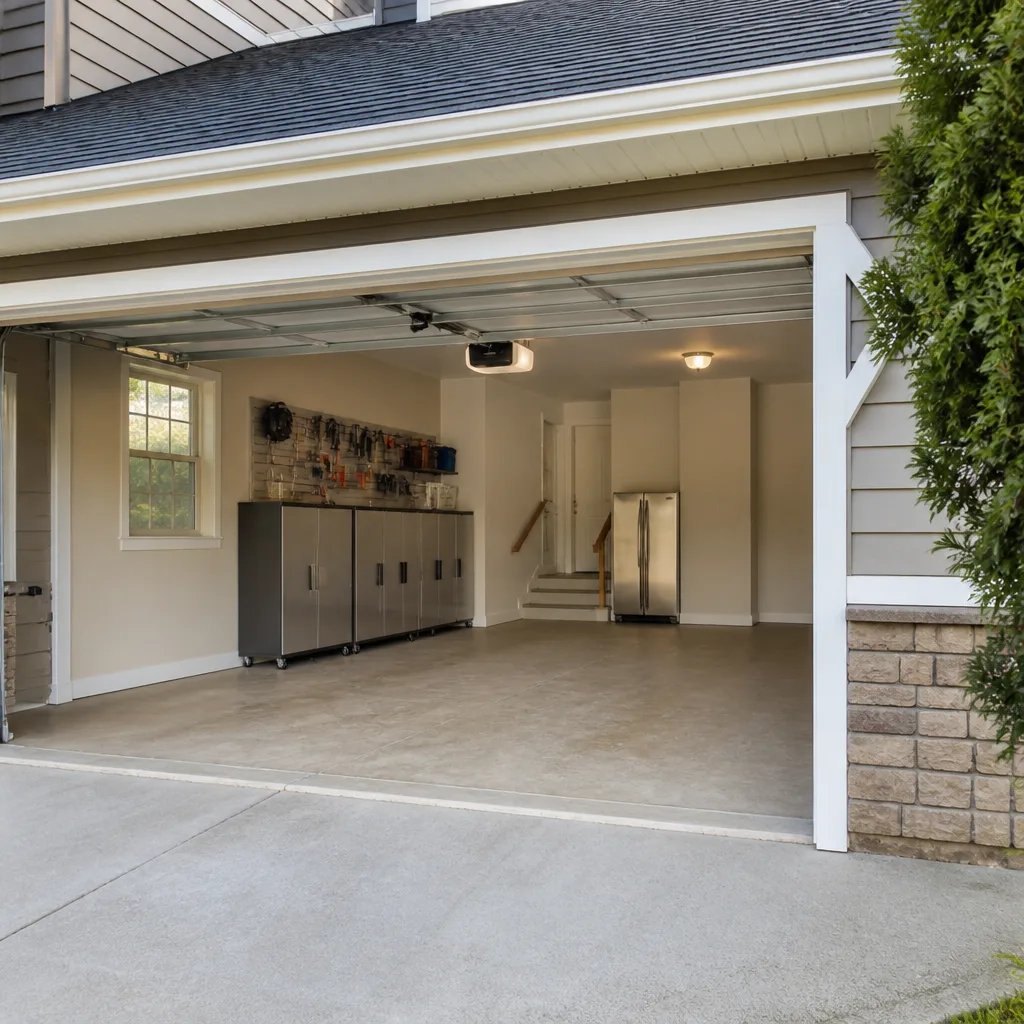 Chamberlain openers
Full 25-point door and opener safety check with every visit - springs, cables, rollers, tracks, and your LiftMaster or Chamberlain opener included
You get a price before we start. It does not change when the truck arrives.
Get your free estimateChoosing the Right Garage Door Brand: A Buyer’s Guide for Spring Valley
Most Spring Valley homeowners shop for a garage door the way they shop for a refrigerator: they look at the label, check the price, and trust the name. That approach works in a showroom and fails in a desert. A brand that earns top marks in a national review may be built and coated for humidity and freeze-thaw, not for a valley that bakes steel at high temperatures for months and swings from cold nights to hot afternoons without warning. A door that looks perfect on day one can chalk, fade, and delaminate long before its headline warranty expires. This guide explains what to compare instead of brand recognition: steel gauge, finish type, insulation core, component warranties, and parts availability here in the Las Vegas metro. You’ll finish knowing how to judge a door for Spring Valley’s climate, not for a showroom floor.
Quick Answer
The right garage door brand for Spring Valley is the one whose steel gauge, finish system, and insulation core are built to handle sustained UV and daily thermal cycling, and whose parts you can actually source in the Las Vegas metro. Brand name matters far less than those three specs and the quality of the installation behind them. Compare component warranties line by line, not the headline number on the brochure.
Styles & brands we work with
- Raised-panel steel
- Carriage house
- Modern flush
- Full-view glass
- LiftMaster openers
- Chamberlain openers
Table of Contents
- Why Brand Name Isn’t the Whole Story in Spring Valley
- The Three Specs That Matter More Than the Logo
- How Desert Sun Actually Ages a Garage Door
- Reading a Garage Door Warranty Component by Component
- Which Brand Tiers Are Worth the Premium Here
- Parts Availability in the Las Vegas Metro
- Why Installation Quality Beats the Brand Decision
- Matching the Door to Your Opener Brand
Why Brand Name Isn’t the Whole Story in Spring Valley
A garage door brand is not a single factory producing a single product. The name on the brochure may cover a dozen door lines built with different steel thicknesses, different coatings, and completely different insulation materials, spanning price points from basic to premium. Two doors carrying the same logo can behave very differently after a few summers here. That’s the first thing we tell homeowners who ask which brand is “best.” It’s the wrong first question.
Spring Valley sits in a high-desert valley, and the phrase that matters is thermal cycling. Summer afternoons push well past 100 degrees, winter nights drop near freezing, and a door that faces west or south takes the full hit. That repeated expansion and contraction works on every seam, joint, and coating edge. A steel door with a thin finish and a poorly bonded insulation core can start showing it in a few years. A door with thicker steel and a proper baked-on finish holds up far longer. Same category of product, very different outcome.
Add the valley’s dust and grit, which works into tracks and rollers, and the local sun, which does to paint what it does to anything left outside. Product literature written for a national audience rarely mentions any of this. When you’re comparing brands, the useful question is narrower: what does this warranty say about finish, insulation, and hardware separately?
Where the manufacturer’s documentation runs out, that’s where a local specialist earns the call. We work on garage doors in Spring Valley and only garage doors, so we’ve watched how different door lines actually hold up across these summers, which is a different set of information than a spec sheet gives you.
The Three Specs That Matter More Than the Logo
If you strip a garage door brochure down to what determines long-term performance in Spring Valley, three technical specs carry most of the weight: steel gauge, finish system, and insulation core. Everything else, including the brand name, is context. Here’s what each means in plain language.
Steel gauge
Gauge refers to the thickness of the steel skin. Lower numbers mean thicker steel, and thicker steel resists denting, holds its shape through thermal cycling, and takes fasteners and hardware without warping. A two-layer steel door may use thinner skins than a three-layer door in the same product family. If a brochure lists a gauge, note it. If it doesn’t, ask.
Finish type
The finish is the factory-applied coating system on the steel, and it does the hard work in the sun. A baked-on finish bonded at the factory outperforms paint applied later, and a finish applied over properly treated steel resists chalking and fading longer. This is where the claim in the opening lives: a coating tuned for humid climates can age quickly under desert UV. Ask what the finish system is, not just what color options exist.
Insulation core
An insulated door uses a core material sandwiched inside the steel skins. That core provides rigidity, sound damping, and some thermal separation. Different core materials age differently and carry different warranty terms. In a climate with big swings between day and night, a core that stays bonded to the skins keeps the door stable. A core that separates lets the skins drum, rattle, and eventually sag.
If a door is without an insulated core, it’s still a perfectly valid choice for some garages. What matters is that you know which you’re buying and why. We repair doors from Clopay, Amarr, and other common lines, and the differences we see trace back to these same three specs far more often than to the label.
How Desert Sun Actually Ages a Garage Door
A garage door takes more direct sun than almost any other exterior surface on a house, and here it takes that sun at high angles for long stretches of the year. Understanding what the sun does to a finish makes brand comparisons concrete instead of theoretical. Materials tend to age in a few recognizable ways:
- Chalking. The finish breaks down at the surface and turns to a powdery film that rubs off white. It’s an early sign the coating isn’t holding up to UV.
- Fading. Pigment in the finish degrades and the color drifts lighter or shifts tone. Dark colors absorb more heat and can show it sooner, but fading is a finish-quality question more than a color question.
- Delamination. The finish lifts or peels away from the steel, usually starting at panel edges, seams, and the bottom section. Once it starts, moisture and grit get underneath the coating.
North-facing doors show far less of this than west-facing doors, so two neighbors on the same street can have very different experience with the same brand. That’s one reason online reviews only get you so far. A homeowner comparing a south-facing door here is comparing against a real load case, and the finish system is what answers it.
Once a door is showing chalking or fading, the practical fixes narrow. Some finishes can be cleaned and touched up, others need recoating, and a badly delaminated door may be due for replacement panels. If you’re weighing repair against replacement, our garage door repair page explains how we evaluate that. For finishes, ask the dealer what that specific product’s finish system is built to handle. The honest answer has more detail than “it’s a great paint.”
Reading a Garage Door Warranty Component by Component
A headline warranty number is the least useful figure on the page. “Lifetime” may cover one part and one part only, and a twenty-year figure may apply to the spring, the paint, or the panels. What you want is the warranty broken down by component. Numbered steps for reading one:
- Find the finish or paint section. Look for a separate number and covered defects listed. If the finish warranty is short or excluded, expect the sun to test the finish sooner than the brochure suggests.
- Find the insulation core section. Check whether the core has its own term and whether delamination between core and skins is a covered defect.
- Find the hardware and moving parts section. Springs, rollers, hinges, and track usually carry separate terms, and they’re the parts that wear first.
- Read the exclusions. Look for language about non-factory painting, altered doors, and products installed incorrectly. Exclusions are where warranties quietly narrow.
- Check whether the warranty follows the door or the first buyer. This matters if you plan to sell or if you’re buying a home with an existing door.
Two doors with identical headline warranties can split very differently once the finish stays and the core stays are on the table. We work across Clopay, Amarr, and Wayne Dalton systems and see what actually fails, and it’s the parts with thin warranty coverage that give out, not the parts with the bold number on the cover.
One caution: warranty coverage typically depends on proper installation, routine maintenance, and parts used to spec. A spring replaced with a mismatched part, or a door installed out of square, is an easy way to lose coverage. That’s a practical reason to have a brand-capable specialist do the work. We answer 24/7. Fast dispatch from 7am to 7pm, so a warped door or broken spring doesn’t leave you guessing until the next opening.
Which Brand Tiers Are Worth the Premium Here
Garage door lines generally come in three rough tiers: entry, mid, and premium. The gap between them is often more about specs than about brand, and in a desert climate that gap matters. A short guide to what’s usually worth paying for here:
- Worth the premium: thicker steel skins, a factory-baked finish system with a meaningful finish warranty, an insulated core with a solid bond, and a three-layer or properly designed two-layer construction.
- Worth considering: a brand tier that comes with better hardware (heavier hinges, better bearing rollers) and a roller and track set rated for what it does.
- Marketing-only: color names with no finish system behind them, “heavy-duty” claims without a gauge, zero-gap insulation claims that ignore bond quality, or prettier trim that doesn’t change performance.
A $300 upgrade to thicker steel and a better finish frequently pays for itself in lifespan here. A similar $300 upgrade to a premium color or extra trim often doesn’t. Spring Valley’s climate rewards the parts that resist sun and heat and punishes the parts that don’t.
We work across Clopay, Amarr, Wayne Dalton, Craftsman, and other common lines, and the honest recommendation is not always the top tier. A north-facing door on a shaded garage may live comfortably on a mid-tier product. We’d rather tell you that than sell the premium line where it doesn’t earn its price. For a new door or full replacement, a written quote from us is a no-cost way to see the difference between tiers before you commit. Our Grafton Garage Door Repair team installs doors here and only here, so we can tell you how a given line tends to look after a few summers. Call (877) 373-8712 for a free estimate.
Parts Availability in the Las Vegas Metro
A door is a moving assembly of springs, cables, rollers, hinges, track, and panels, and every one of those will eventually need attention. What separates brands in this valley is not whether they break, but how quickly a replacement part shows up. Some parts are stocked locally or carry daily-truck access through Las Vegas distributor networks. Others, particularly proprietary panels or particular model-specific hardware, are special orders with long lead times.
A practical test before you buy a brand:
- Ask the dealer which common replacement parts for your model live in the Las Vegas metro, and which are special order.
- Ask which parts typically fail first in desert heat (springs and rollers, usually) and whether they’re locally stocked.
- Ask about panels. A door with a dented bottom section is only fully fixed if that panel can be sourced in a reasonable time.
For a door in Spring Valley, the answer matters even more than in a city with longer product lifecycles. A special-order panel on a discontinued line can leave a damaged door looking like it for longer than you’d want. Brands with established local distribution networks, which often include lines like Wayne Dalton and Clopay, tend to make parts easier to get. We work on all of the common brands and can tell you what we can typically source here. Once you know the brand, the next concern is often whether the existing door’s opener can run it, which our garage door opener repair page covers.
If a door is waiting on parts and the opener is older, it may be worth matching the two. Openers from LiftMaster, Chamberlain, Genie, and Craftsman are common in this valley, and our team knows how those systems pair with newer and older doors.
Why Installation Quality Beats the Brand Decision
A well-made door installed badly will disappoint you, and a mid-tier door installed correctly will outlast it. That’s the central trade fact under this whole guide, and it’s the one most homeowners miss. Installation quality is where the brand decision drops to secondary. The parts that prove it:
- Measure and assess before ordering. A proper install starts with an on-site measure of the opening, the header, the side room, and the floor. A door ordered on a phone call can arrive undersized or oversized.
- Spring and balance match. The door needs the correct spring for its weight. Under-sprung doors strain the opener; over-sprung doors strain the door and the hardware.
- Level track and square frame. Poor track alignment leads to premature roller wear, binding, and a door that doesn’t seal.
- Weather seal and threshold fit. In Spring Valley, sealing against dust and evening temperature swings is part of what a door does.
- A trained, stocked dealer network. Authorized installers who are trained on a specific manufacturer’s system and who stock the parts matter more than the badge on the brochure.
The best way to get that match is a single-trade specialist. We work on garage doors, and only garage doors, so the measuring, ordering, springs, track, and opener side all sit with the same team. If you’re ready to see the difference, our Spring Valley service page explains how we handle replacement and repair here. The brand on the door can change; the quality of installation usually decides how long it lasts.
Matching the Door to Your Opener Brand
The opener is the other half of the system, and it’s often where brand mismatches show up. Many Spring Valley homes run a LiftMaster, Chamberlain, Genie, or Craftsman opener, and those systems pair differently with doors of different weights and heights. A newer insulated door is heavier than the door it may replace, and an older opener tuned for a lighter door will struggle.
What to check before installing a new door on an existing opener:
- Confirm the opener’s horsepower rating and the weight it’s rated to lift.
- Check whether the door’s weight falls within the opener’s spec after adding insulation and thicker steel.
- Test the safety reverse and photo-eye system after install, not just at the keypad.
- Consider whether a smart or Wi-Fi opener is worth it. It’s a genuinely useful upgrade, not a gimmick, especially remote monitoring for a garage that faces the street.
We handle both the door side and the opener side in-house, so we can tell you if a new door fits your existing opener or if the opener needs replacement. Whichever way it goes, we’ll give it to you straight. Call (877) 373-8712 for a free estimate before you commit to either.
Common Mistakes to Avoid
- Buying on brand recognition alone. A famous brand can sell a finish system built for humid climates into a desert valley. Ask what the finish spec is, not just who made it.
- Accepting the headline warranty without reading the components. “Lifetime” usually covers one part. The finish, insulation, and hardware terms tell the real story.
- Ignoring which way the door faces. West-and-south-facing doors take the full afternoon sun in Spring Valley. Two doors on the same street can age very differently because of orientation alone.
- Assuming any installer can hang any brand. A brand-tuned, trained installer follows the manufacturer’s spec, which is what keeps the warranty valid. A generalist working from a truck of mixed parts is a risk.
- Forgetting to ask about parts timelines. A door that can’t get a replacement panel when it’s dented will look dented for a while. Confirm local availability before you order.
- Overspending on the premium tier without checking the specs. The upgrade is worth it for thicker steel and a better finish. It’s not always worth it for chart-topping colors and trim.
- Skipping maintenance through the hot months. Dust, grit, and dried-out rollers are normal in this valley. Annual lubrication and balance checks are what keep a good door from turning into a squealing one.
See the difference
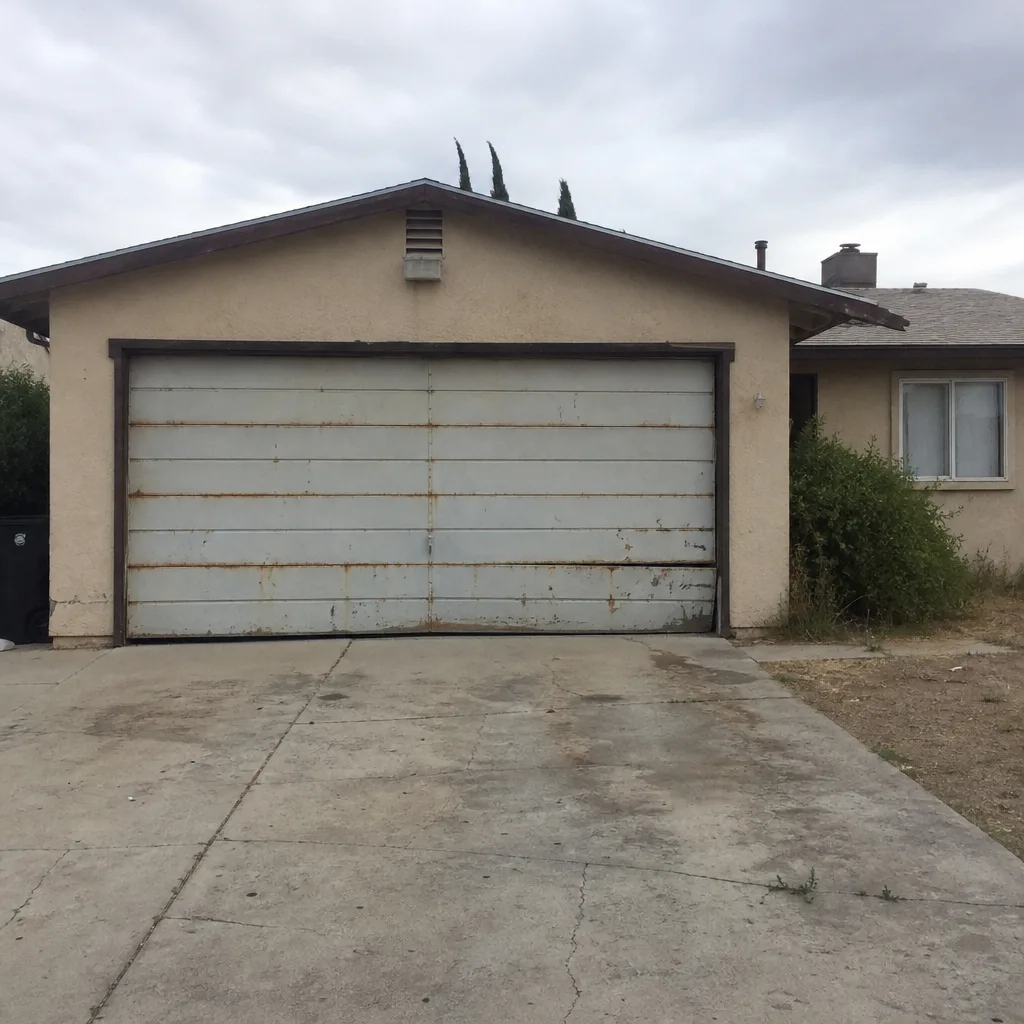 Before
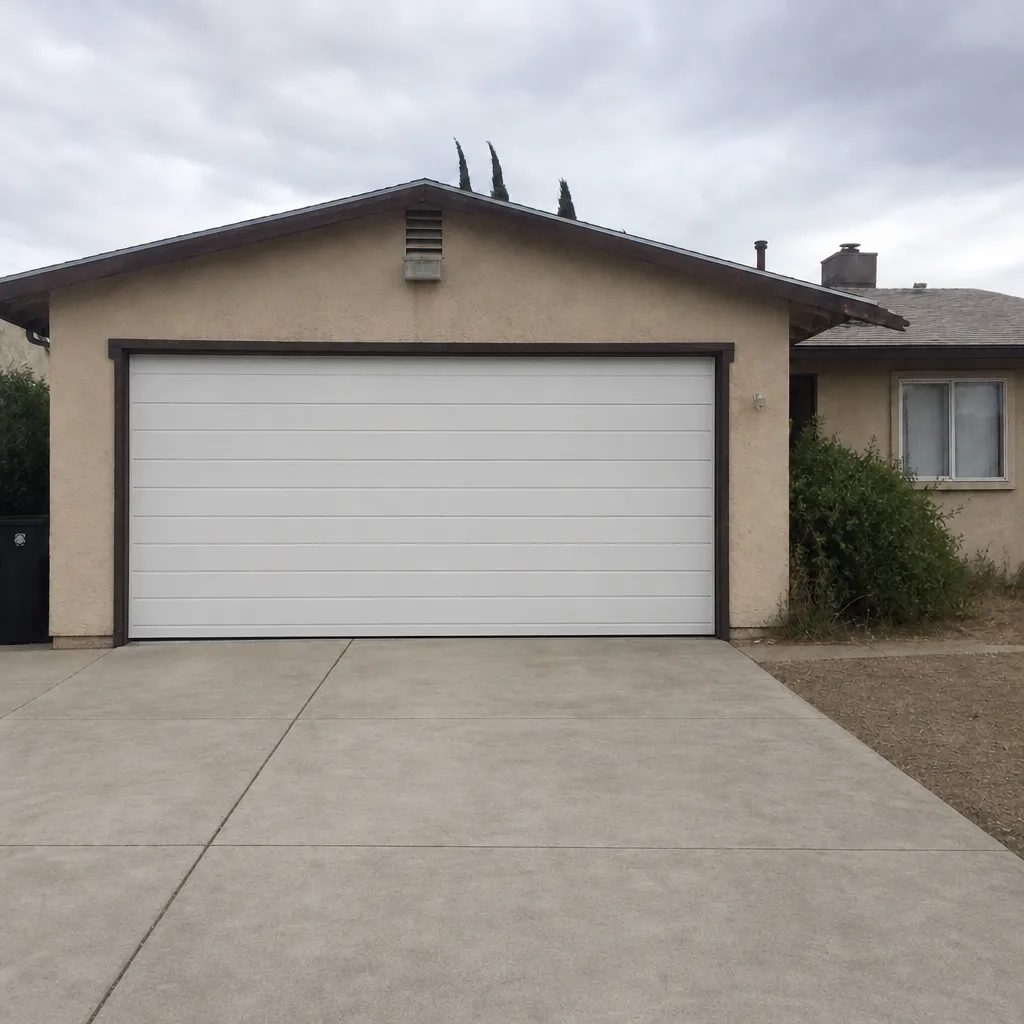 After
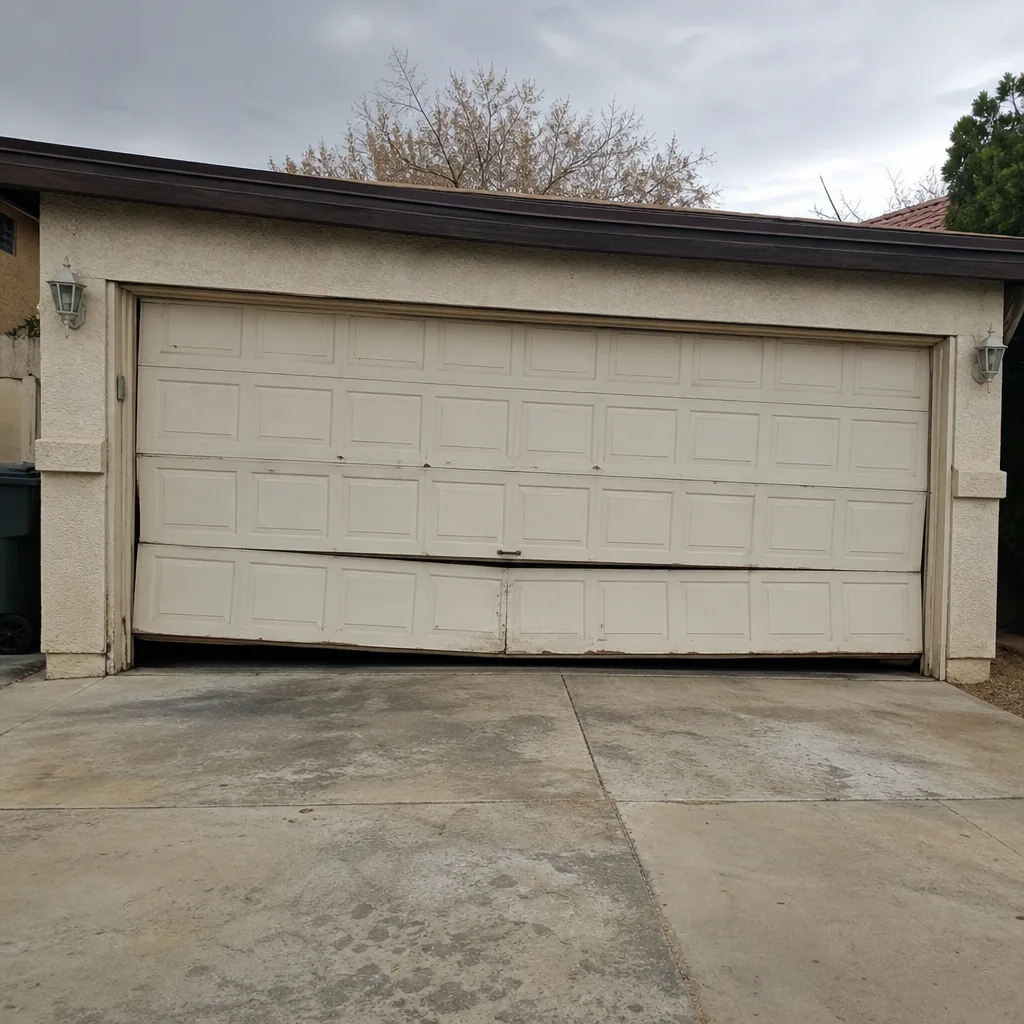 Before
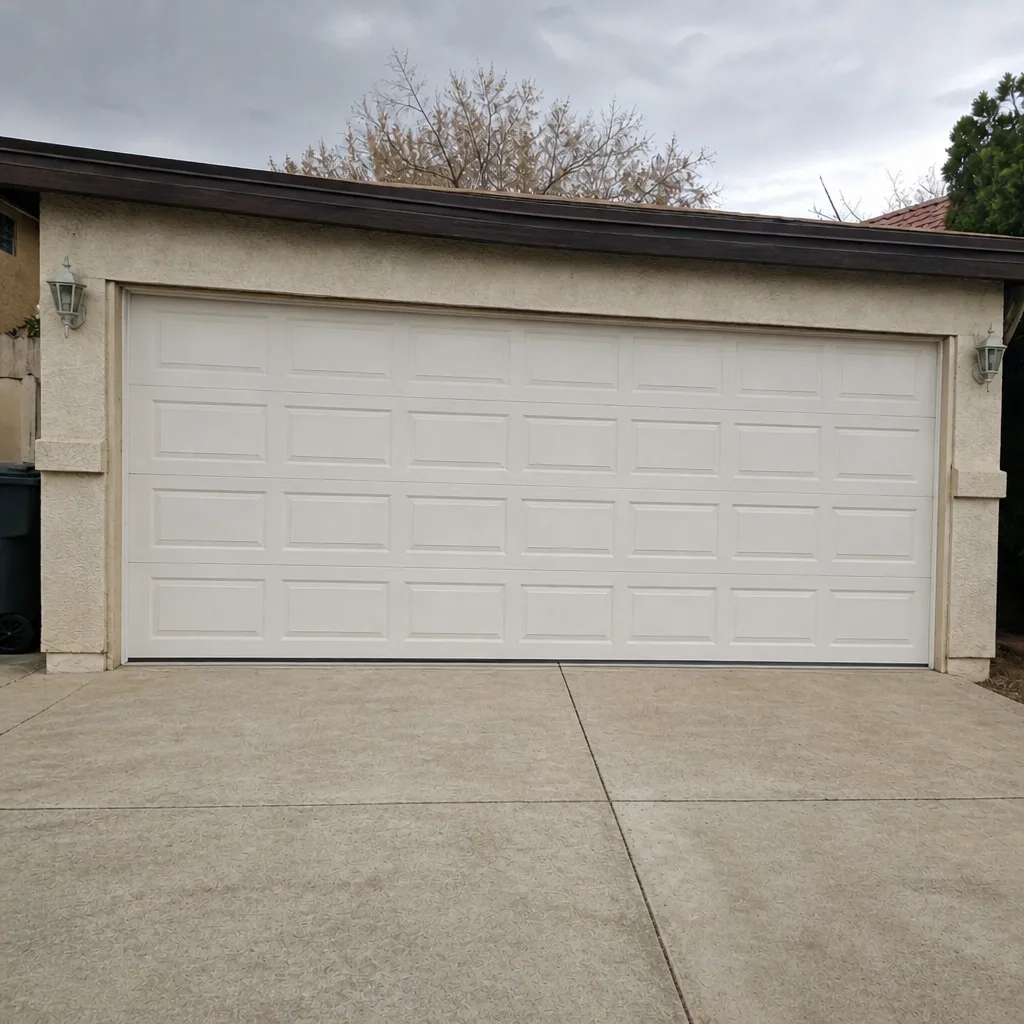 After
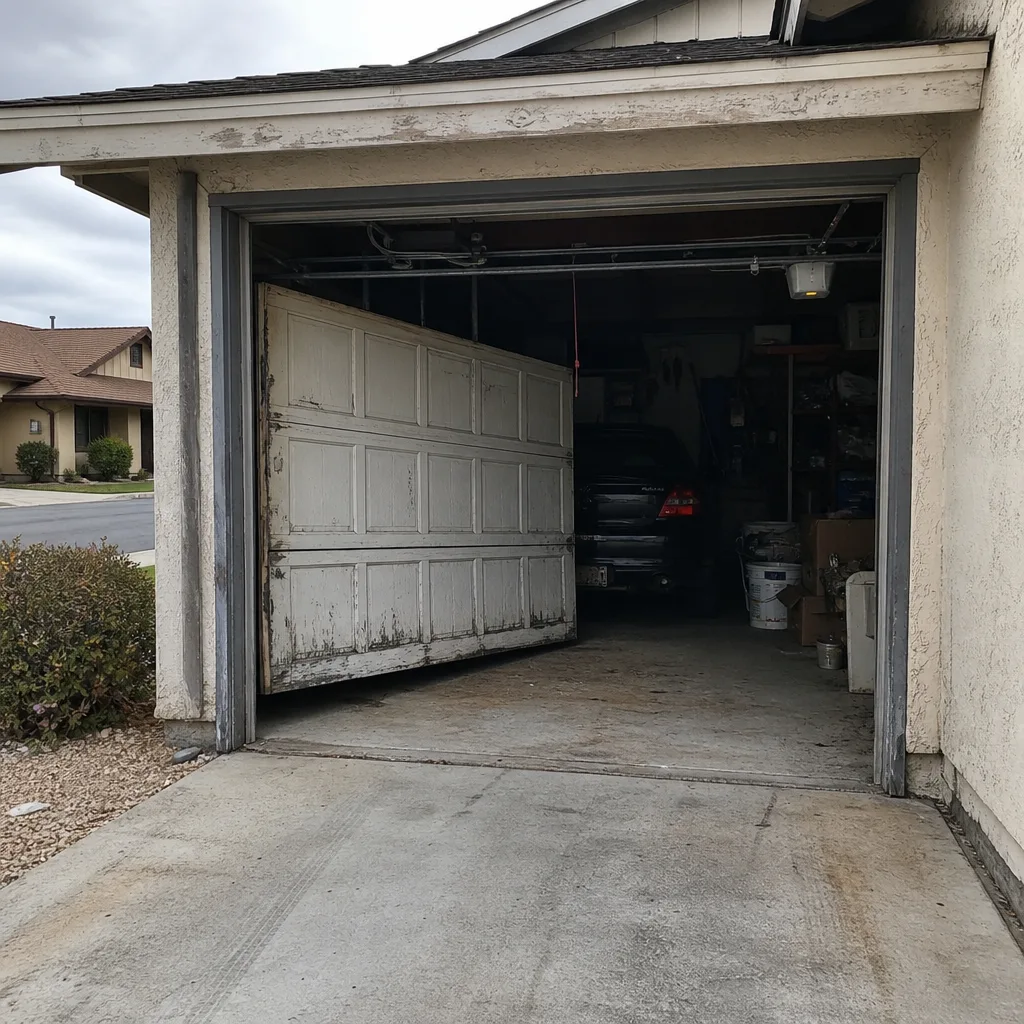 Before
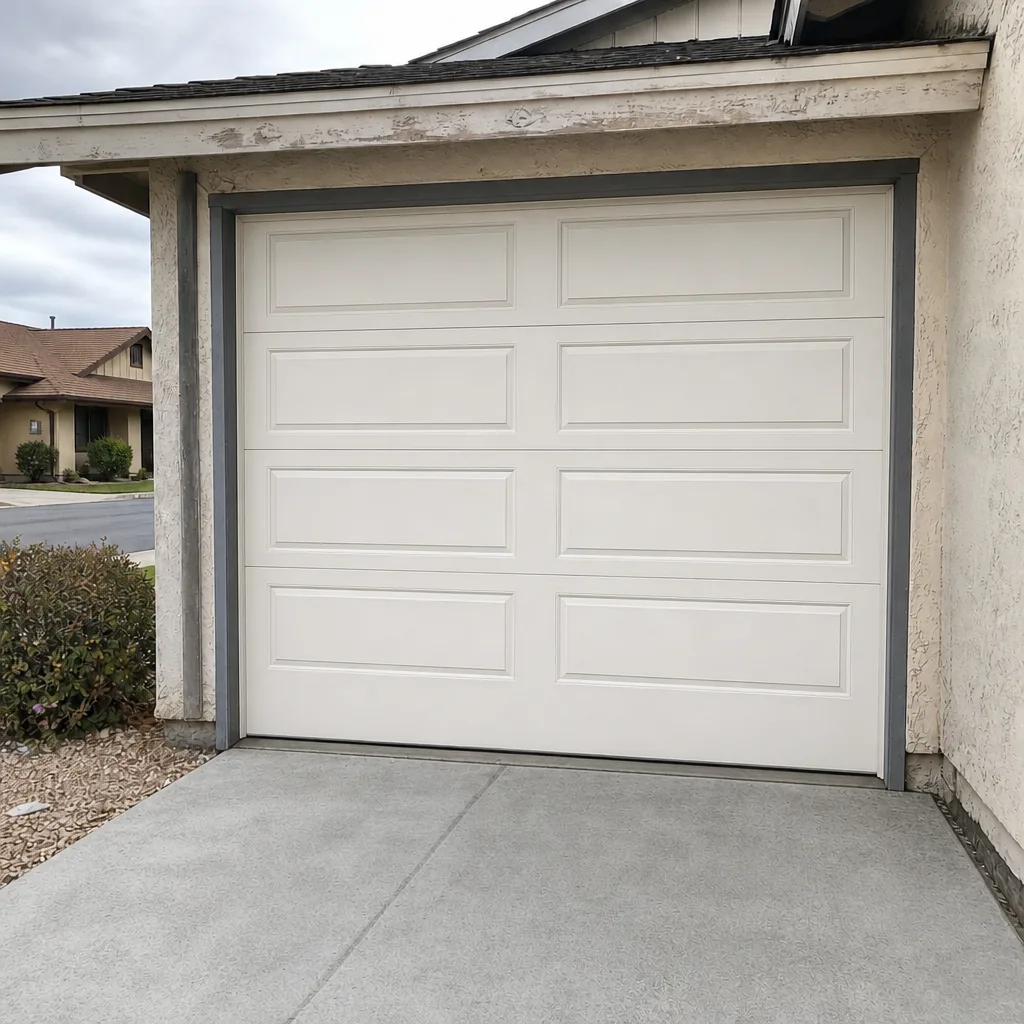 After
When to Call a Professional
Some of this is a careful homeowner’s job. Balancing springs, replacing cables, and re-hanging panels is not. Springs and cables store serious force even on a door that looks tired, and an untrained attempt can end badly. Call a pro if a spring snaps, a cable hangs slack or frayed, the door comes off its track, or the door sags noticeably at one corner or won’t close evenly. Also worth calling: a door that’s suddenly heavy to hand-lift, an opener that reverses partway or sounds like it’s straining, or a door that’s simply beyond a finish that’s chalking and flaking and needs a replacement plan. We work on all the common brands and will give you an honest repair-or-replace call rather than a forced sale. Grafton Garage Door Repair offers free estimates in Spring Valley – call (877) 373-8712. We answer 24/7. Fast dispatch from 7am to 7pm. A call outside dispatch hours is booked into the next opening, Sunday through Friday, 7am to 7pm.
Frequently Asked Questions
There’s no single best brand for Spring Valley because the same brand sells several tiers with different specs. What matters most is steel gauge, finish system, and insulation core bonded to handle sustained UV and thermal cycling, plus a warranty with real component coverage. Judge those first. Then judge the brand. A door with the right specs on the right tier will outperform a “known” brand in a weaker tier.
Yes, when the premium tier buys thicker steel, a factory-baked finish with a meaningful finish warranty, and an insulated core that stays bonded through big temperature swings. No, when the premium tier mostly adds trim, premium color names, or marketing terms without a gauge or finish spec behind them. In a desert valley, it’s the finish and the steel that earn the upgrade. Check the specs, not the brochure cover. Call (877) 373-8712 for a free estimate and a look at how tiers compare.
Not necessarily. A door tuned for a cooler or more humid climate can chalk, fade, and delaminate under Spring Valley’s sun and heat. Reviews track climate, and a strong review from a different climate doesn’t test the finish system the way this valley does. Treat reviews as one input and check the component warranty and the finish spec as your main evidence.
We work across LiftMaster, Chamberlain, Genie, Clopay, Amarr, Wayne Dalton, Craftsman, and Raynor, which covers nearly any door or opener a homeowner here is likely to own. That also means we can compare tiers and brands from hands-on experience with how each one holds up. If you’re not sure what you have, we can identify it on the visit.
Common parts, like springs and rollers for the lines we work on, are typically stocked or quickly sourced in the Las Vegas metro. Two exceptions: proprietary panels and some model-specific hardware. Those may be special orders with a lead time. We’ll tell you which parts are common stock and which are special order before we schedule the work. The written estimate sets the final price. Call (877) 373-8712 for an exact quote.
Sometimes, and it depends on the weight. A newer insulated door is often heavier than the door it replaces, and the opener needs to be rated for that weight. We check the opener’s rating and the door’s spec before recommending either repair or replacement. If the opener is too small for the new door, we’ll tell you and quote the right fix. Reach out and we’ll walk through it: (877) 373-8712.
The Bottom Line
For a garage door in Spring Valley, the brand on the door is a starting point, not an answer. Look at steel gauge, the finish system, and how the insulation core bonds, and read the component warranty for each of those. Check what parts you can realistically get in the Las Vegas metro. Then look at the installer, because the best brand installed badly won’t last and a mid-tier door installed right will. A focused garage door team can compare lines with you, give an honest repair-or-replace call, and quote before work starts. Call Grafton Garage Door Repair at (877) 373-8712 for a free estimate. We’re a garage door specialist in Spring Valley, not a jack-of-all-trades, and we’ll tell you which door line meets the climate honestly.
Written by the team at Grafton Garage Door Repair, serving Spring Valley since 2013.